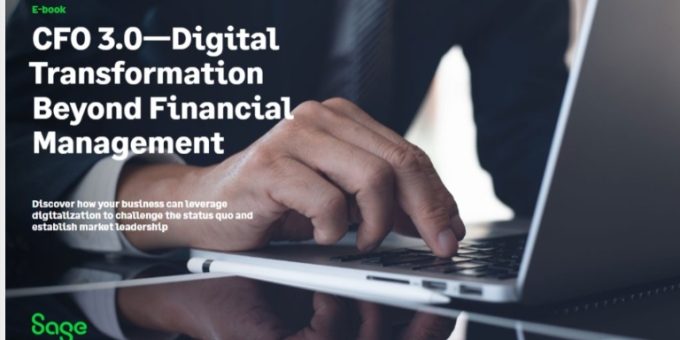
CFO 3.0—Embrace Digital Transformation to Drive Business Leadership
The Future of Finance: Beyond Traditional Accounting
The role of the Chief Financial Officer (CFO) is evolving. As the world rapidly embraces digital technologies, the CFO of today must go beyond the confines of financial management and evolve into a strategic business leader. Welcome to CFO 3.0, an era where the CFO harnesses the power of data, emerging technologies, and digital tools to drive business transformation.
CFO 3.0 is not just about keeping the books; it’s about anticipating future opportunities, guiding strategic decisions, and leveraging real-time data to lead your organization toward sustained growth.
Why CFO 3.0 Matters
Digitalization is fundamentally transforming the finance industry. The shift from traditional financial management (CFO 1.0) to the data-driven CFO 2.0 and, ultimately, to the visionary CFO 3.0, is redefining what it means to lead the finance function. From automated processes to AI-driven insights, the modern CFO is not just a number cruncher—they are a forward-looking leader who can provide strategic counsel, lead digital transformation, and propel the business into the future.
Key Drivers of CFO 3.0:
- Real-time data: CFOs now have access to up-to-the-minute insights, allowing for faster decision-making and more proactive strategies.
- Predictive analytics: With AI and machine learning, CFOs can forecast trends, anticipate market shifts, and guide business strategy.
- Automation: Streamlining manual processes using cloud-based solutions frees up time for strategic tasks, enhancing productivity and operational efficiency.
- Business counsel: Today’s CFO is seen as a trusted advisor to the CEO, using financial data to guide the company’s overall direction.
The Evolution of the CFO: From CFO 1.0 to CFO 3.0
CFO 1.0: Traditional Financial Management
At this stage, CFOs were focused on historical financial reporting—keeping the books up to date, reconciling profit and loss, and reporting on past performance. CFO 1.0 was looking in the rearview mirror, focusing on what happened yesterday or last week.
CFO 2.0: Data-Driven Financial Leadership
CFOs in this era embraced cloud-based tools and business intelligence to move beyond basic financial reporting. They began to analyze real-time data, automating time-consuming tasks and freeing up valuable resources. This stage marked a shift toward data-driven decision-making, but it still lacked the predictive power of emerging technologies.
CFO 3.0: Visionary Business Leaders
Now, we’re entering the era of CFO 3.0—a forward-thinking leader who leverages robotic process automation (RPA), artificial intelligence (AI), and machine learning (ML) to not only analyze current performance but also forecast future trends. CFO 3.0 is about digital transformation and using technology to not just optimize processes but to create a competitive edge, unlock new revenue streams, and guide the business into the future.
This article is posted at sage.com

Please fill out the form to access the content