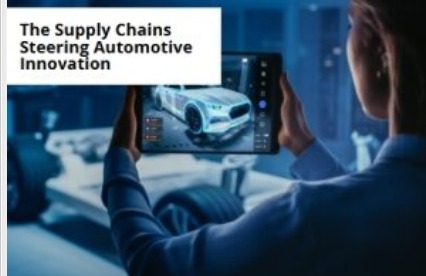
Framing the Supply Chain Imperative in Automotive Innovation
The Race for Advanced, Secure, and Safe Vehicles
The automotive industry is entering a critical phase of competition as companies around the world race to develop the most advanced, secure, and safe vehicles. With the rise of new players, shifting consumer demands, and the accelerating transition to software-defined vehicles (SDVs), this competition will only intensify throughout 2024 and beyond.
Global competition is heating up due to:
- The emergence of new entrants from China,
- Rising demand for advanced connected vehicle features,
- The need for flexible powertrain solutions,
- Changing industry regulations.
The automotive supply chain is at the heart of this transformation, where collaboration between automakers, suppliers, and tech partners is more important than ever. This collaboration must extend across the entire vehicle lifecycle, addressing the growing complexity of electrical/electronic (E/E) architectures, automotive systems-on-chip (SoCs), cybersecurity threats, and shorter development cycles. In this fast-evolving landscape, the ability to adapt and innovate within these supply chains will define the industry’s competitive edge.
Semiconductors: Powering the Future of Automotive
The Growth of the Automotive Semiconductor Market
In 2023, the global automotive semiconductor market reached an estimated $74 billion, a 14% increase over 2022. This growth was driven by the rapid rise of vehicle production, especially in China, and the continued adoption of advanced automotive technologies worldwide.
- Semiconductor suppliers are prioritizing automotive innovation, with established companies like Infineon, NXP, and emerging players like NVIDIA and AMD making significant investments.
- Advanced technologies like ADAS (Advanced Driver Assistance Systems) and IVI (In-Vehicle Infotainment) are creating exciting opportunities for semiconductor suppliers.
The automotive semiconductor market is thriving, and demand is expected to keep rising—especially for hybrid and electric vehicles (EVs).
This article is posted at omdia.tech.informa.com

Please fill out the form to access the content